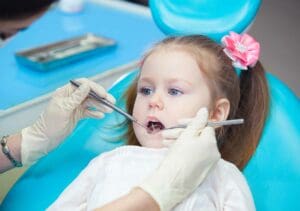
Most children start losing their baby teeth around age 6, although some begin a little earlier or later. The bottom front teeth are usually the first to fall out, followed by the top front teeth. This process continues over several years as permanent teeth gradually take their place.
Table of Contents
Baby Teeth Usually Fall Out in a Certain Order
Children have 20 baby teeth, and they generally lose them in a similar order to how they first appeared. The front teeth come out first, while the back teeth usually stay in place longer.
Here is a general timeline of when baby teeth fall out:
| Baby Teeth | Typical Age They Fall Out |
| Front center teeth (central incisors) | 6–7 years |
| Teeth next to the front teeth (lateral incisors) | 7–8 years |
| First baby molars | 9–11 years |
| Pointed teeth (canines) | 9–12 years |
| Second baby molars | 10–12 years |
These ages are guidelines. Some children lose their teeth earlier or later and still develop normally. By around age 12 or 13, most children have lost all their baby teeth.
Why Do Baby Teeth Become Loose?
When a baby tooth starts to wiggle, there’s actually a lot happening beneath the gums. As the permanent tooth develops and moves toward the surface, the body gradually absorbs the roots of the baby tooth through a natural process called root resorption.
Over time, the roots become shorter, leaving less support to hold the baby tooth in place. Eventually, the tooth becomes loose enough to fall out, making room for the permanent tooth.
This is also why a baby tooth that falls out naturally often looks like it has no roots. Most of the root structure has already been absorbed by the body. The permanent tooth may appear shortly afterward or take several months to emerge.
What If Your Child Loses a Baby Tooth Too Early?
Baby teeth are meant to stay in place until the permanent teeth are ready to replace them. When a child loses a baby tooth prematurely because of an injury or severe decay, it can affect how the permanent teeth come in.
One concern is that neighboring teeth may begin shifting into the empty space. If this happens before the permanent tooth is ready to emerge, there may not be enough room for it to come in properly, potentially leading to crowding or alignment problems.
Depending on which tooth was lost and how soon the permanent tooth is expected to emerge, we may recommend a space maintainer. This small dental appliance holds the space open until the permanent tooth is ready to come in.
Not every case of early tooth loss requires treatment. At South OC, we evaluate your child’s dental development to determine whether a space maintainer is necessary or if monitoring is the better approach.
What If Baby Teeth Are Not Falling Out on Time?
Some children are simply late to lose their baby teeth. If your child is 7 or 8 and has not lost a tooth yet, it does not automatically mean something is wrong.
However, delayed tooth loss can sometimes be related to:
- Permanent teeth developing later than expected
- A permanent tooth growing in an unusual position
- Crowding that affects how teeth emerge
- A baby tooth that has not loosened as expected
- A missing permanent tooth beneath the baby tooth
During pediatric dental exams, we check how your child’s teeth and jaws are developing. When needed, digital X-rays can help us see the position of permanent teeth beneath the gums.
Our approach is to monitor normal development and recommend treatment only when there is a reason to intervene.
FAQs
How long does it take for an adult tooth to come in after a baby tooth falls out?
Sometimes the permanent tooth appears almost immediately, while other times it may take several months. The timing depends on the tooth and how far along it is in development. If the space remains empty longer than expected, we can check its progress.
Should I pull a loose baby tooth or let it fall out on its own?
It’s usually best to let a loose baby tooth fall out naturally. Your child can gently wiggle it with their tongue or a clean finger to help it along. If the tooth is barely attached, it may come out with a gentle tug, but never force it. Pulling a tooth before it’s ready can cause unnecessary pain and bleeding.
Can you tell if a child will need braces before all their baby teeth fall out?
Yes. Certain bite problems, crowding, and jaw development concerns can be identified while a child still has baby teeth. An early orthodontic evaluation can help determine whether Phase 1 orthodontic treatment may be beneficial or if it’s better to wait until more permanent teeth have emerged.
Support Your Child’s Dental Development
Losing baby teeth is an exciting milestone, and every child follows a slightly different timeline. Regular dental visits help us track these changes and make sure permanent teeth have the best opportunity to develop properly.
If you are searching for a pediatric dentist in South Orange County that is accepting new patients, call (949) 581-5800 or visit us at 26302 La Paz Rd #114, Mission Viejo, CA 92691.