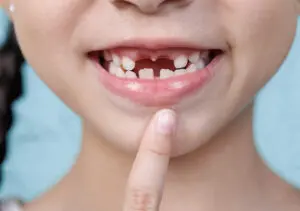
White spots on your child’s teeth can appear for several reasons, including early tooth decay, excess fluoride during tooth development, or differences in how the enamel formed. Some spots are harmless, while others may need treatment to protect the tooth.
Table of Contents
Common Causes of White Spots on Children’s Teeth
White spots can appear on baby teeth or permanent teeth. Their appearance, location, and when they first developed can offer clues about what caused them.
Early Tooth Decay
One of the first signs of tooth decay can be a chalky white spot on the enamel. These spots form when acids produced by bacteria remove minerals from the tooth’s surface.
You may notice them near the gumline or in areas where plaque collects. Unlike a cavity that has already formed a hole, early enamel damage may be stopped or reversed with proper care.
Dental Fluorosis
Dental fluorosis occurs when a child gets too much fluoride while their permanent teeth are developing beneath the gums. It can cause faint white lines, streaks, or cloudy patches that become visible when the teeth come in.
Most cases are mild and do not affect the health or function of the teeth. Fluorosis cannot develop in teeth that have already finished forming, so white spots that appear later have another cause.
Enamel Hypoplasia or Hypomineralization
Sometimes tooth enamel does not form properly. A child may have areas where the enamel is thinner than normal (enamel hypoplasia) or where it is weaker because it did not develop enough minerals (hypomineralization).
These conditions can cause white, cream-colored, or yellowish patches. Some affected teeth may also be sensitive or more likely to develop cavities.
The changes may be noticeable as soon as the tooth comes in, rather than developing gradually afterward.
How Are White Spots on Children’s Teeth Treated?
Treatment depends on what caused the white spots and whether the enamel is healthy or weakened. At South OC, we take a conservative approach, recommending care based on your child’s dental development and individual needs.
Treatment options may include:
- Early tooth decay: Professional fluoride treatments can help strengthen weakened enamel and reverse early mineral loss. If a cavity has formed, a composite dental filling may be necessary.
- Dental fluorosis: Mild cases usually do not require treatment. If the discoloration is bothersome, cosmetic options such as enamel microabrasion or resin infiltration may help improve the appearance of the teeth.
- Enamel hypoplasia or hypomineralization: Mild cases may only need monitoring and preventive fluoride treatments. If the enamel is weak, sensitive, or breaking down, protective or restorative treatment may be recommended.
How to Protect Your Child’s Enamel
Good daily habits can help prevent new white spots caused by early decay and protect teeth that already have weakened enamel.
- Help your child brush twice daily with fluoride toothpaste, using an age-appropriate amount.
- Floss daily to remove plaque a toothbrush cannot reach.
- Limit frequent sugary snacks and drinks that expose teeth to repeated acid attacks.
- Encourage water between meals.
- Keep up with regular dental visits so changes in the enamel can be identified early.
For children younger than 3, use a rice-sized smear of fluoride toothpaste. Children ages 3 through 6 should use a pea-sized amount. Supervise brushing and encourage your child to spit out the toothpaste rather than swallow it.
FAQs
Can white spots on teeth spread?
White spots do not spread from one tooth to another, but spots caused by early decay can grow larger if mineral loss continues. White spots caused by fluorosis or enamel development do not spread after the teeth have formed.
Can braces cause white spots on teeth?
Yes. White spots can develop during orthodontic treatment if plaque builds up around the brackets and isn’t removed thoroughly. The bacteria in plaque produce acids that weaken tooth enamel, causing white spots to form. Brushing carefully around brackets, flossing daily, and keeping up with regular dental cleanings can help prevent this.
Can teeth whitening remove white spots caused by fluorosis?
Teeth whitening may help make mild fluorosis spots less noticeable by reducing the color difference between the spots and the surrounding enamel. However, whitening does not remove the spots themselves and can sometimes make them appear more noticeable.
Helping Your Child Maintain Healthy Tooth Enamel
If you’ve noticed white spots on your child’s teeth, our board-certified pediatric dentists, Dr. Sam Wu and Dr. John De Lorme, are here to answer your questions and help you understand what they mean for your child’s dental health.
To schedule an appointment at our pediatric dental office in Mission Viejo, call (949) 581-5800 or visit us at 26302 La Paz Rd #114, Mission Viejo, CA 92691.